Imagine constructing a tall building. It’s not as simple as stacking bricks. There’s a blueprint, team of experts, as well as the proper tools. This is the premise of DevOps, which bridges the gap between operations and development to create software more quickly, safer and more efficiently. When this idea is combined with Amazon Web Services (AWS) it gives you a dynamic toolkit that will alter the workflow of your development.
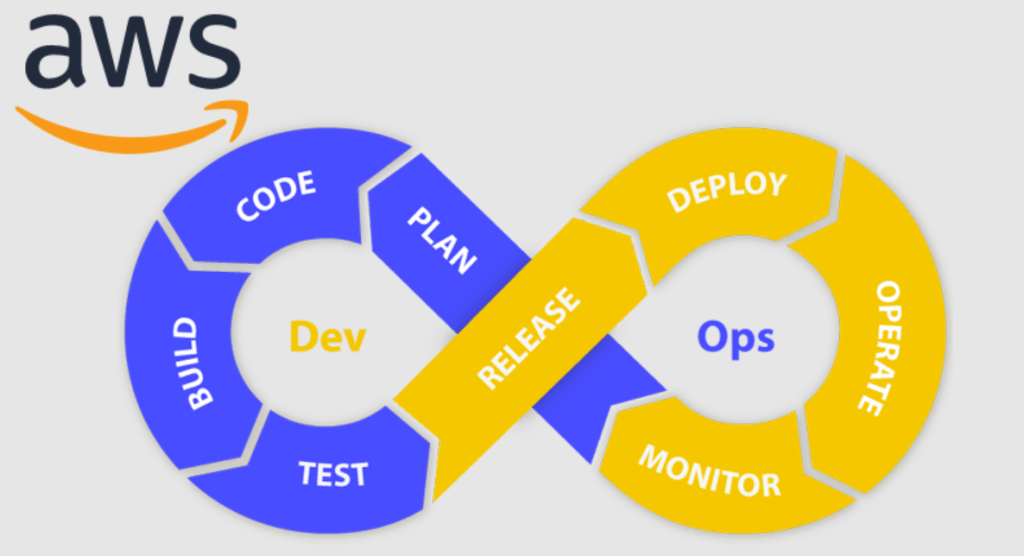
This article will walk you through the basics of establishing yourself using AWS DevOps, making the technical details understandable and enjoyable. If you’re a budding developer dreaming of developing scalable apps, or an expert in the field improving workflows, this article is your path to success.
What is AWS DevOps?
AWS DevOps represents the combination of two powerful concepts: AWS’s cloud services and the principles of DevOps. AWS offers a variety of tools that assist teams in automating their development processes, work effectively, and develop applications with speed.
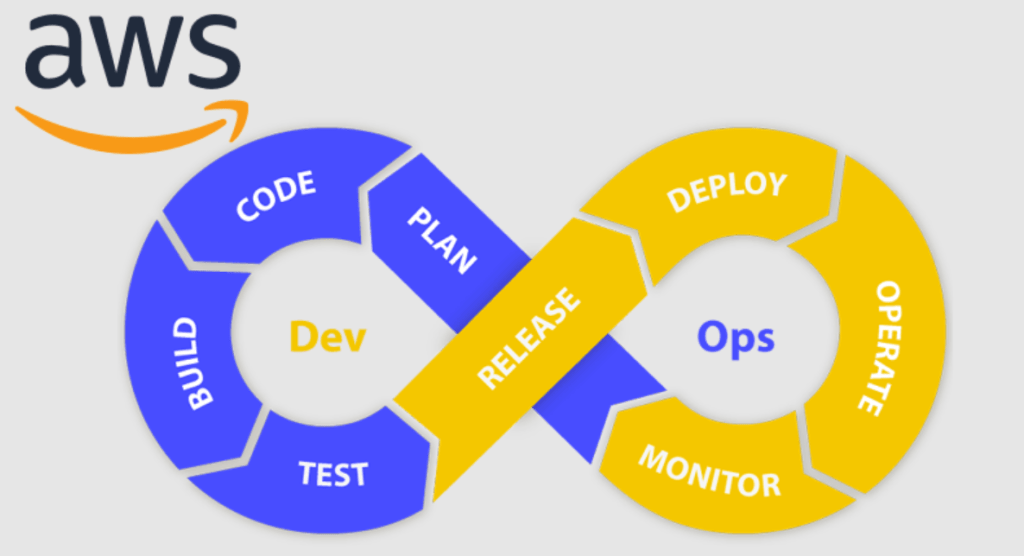
DevOps is all about breaking down barriers. Operations and developers work together to achieve greater outcomes. AWS is a good example of this and enhances it with tools for the automation of infrastructure Continuous integration and delivery (CI/CD) monitoring and scaling.
Imagine AWS DevOps as the Swiss Army knife for software engineers. It offers a tool to tackle every task and is made to work seamlessly.
Why AWS DevOps Matters
Let’s suppose you’re a chef cooking dishes for an eatery. Without the proper tools it’s a slow and dangerous procedure. Imagine having a precision machine that automates cooking, chopping and plating all while you look over the bigger picture. AWS DevOps Training Online offers that kind of efficiency to software development.
The benefits of this are:
- Speed Automate repetitive tasks and speed up deployments.
- Reliability ensures consistency with the automated test and monitor.
- Scalability adapts quickly to new demands without re-inventing infrastructure.
- Collaboration Facilitate seamless communication between the development as well as operations team.
In the ever-changing technological world These advantages aren’t desirable to possess, they’re vital.
Core Components of AWS DevOps
Let’s break it into bite-sized pieces. AWS DevOps revolves around a couple of key applications and resources:
1. AWS CodePipeline
AWS CodePipeline is the core of your CI/CD procedure. It streamlines the build, test, and deployment phases, making sure that updates are delivered to users quickly and in a safe manner.
Analogy Consider an assembly line in which the raw material (code) are transformed, examined (tested) and finally is delivered as a polished item (deployment). CodePipeline is able to keep this line running effortlessly.
2. AWS CodeBuild
CodeBuild builds your program, performs tests, and then produces software ready to deploy. It’s fully-managed and doesn’t require you to maintain or setup an own server for building.
3. AWS CodeDeploy
When your program is complete, CodeDeploy handles the distribution. It can handle various types of deployment (e.g. rolling updates) and minimizes downtime.
4. AWS CloudFormation
Consider CloudFormation as a blueprint for your infrastructure. It lets you specify your resource (servers databases, servers and so on.) in code that makes it easy to replicate and scale your environments.
5. Amazon CloudWatch
Monitoring is vital for DevOps Monitoring is essential in DevOps, and CloudWatch offers real-time insight into the health of your application and its performance.
These tools, along with others, create a comprehensive environment designed to speed up and extend the lifecycle of your development.
How to Get Started with AWS DevOps
Beginning by implementing AWS DevOps can feel like opening a huge puzzle. Here’s a quick guide:
First Step: Understand the basics of AWS
Before you dive into DevOps be sure to familiarize yourself with the core AWS services such as EC2 (Elastic Compute Cloud), S3 (Simple Storage Service) as well as IAM (Identity and Access Management). AWS has extensive documentation available and free-tier services to try.
Second Step: Know DevOps Principles
Learn about concepts such as the CI/CD model, Infrastructure as Code (IaC) and containerization. Tools such as Docker and Kubernetes frequently work well with AWS.
3. Test using AWS Tools
- Begin with a simple pipeline using an AWS codepipeline, and CodeBuild. Create an easy CI/CD pipeline for a simple application.
- Learn about CloudFormation templates to design and automate the infrastructure.
Fourth Step: Automatize and optimize
Automate tasks that are repetitive including the testing process and deployments. Make use of CloudWatch to monitor your apps and create alerts for abnormalities.
Step 5: Scale Up
As you gain confidence as you gain confidence, add advanced AWS services such as Elastic Beanstalk for application deployment or Lambda for serverless computing.
Best Practices to Keep in Mind
- Start small Do not try to automate everything in one go. Start with smaller and manageable tasks.
- Make Security a priority Utilize AWS’s security features such as IAM role and encrypted to secure your assets.
- Iterate and improve Review regularly your workflows and pipelines in order to find bottlenecks or inefficiencies.
- Stay Up-to-date: AWS frequently updates its services. Be aware of the latest features that could improve your configuration.
Final Thoughts: The Road Ahead
It’s like playing an instrument. It can at first seem daunting. With practice with the appropriate tools it’s possible to make workflows as seamless as the symphony.
AWS provides the flexibility and capacity to meet the needs of both novices as well as seasoned professionals. When you’re developing your first app or improving an enterprise’s global software delivery The principles as well as the tools used by AWS DevOps can pave the path to success.
Beginning small, taking on automation and focusing on continual improvement, you’ll not just improve your development process, but also establish the basis for the future of innovation and growth.
So, put on your sleeves then take a chance to let AWS DevOps be the blueprint for your next building of skyscrapers of technological innovation!
 Educational streams